Best Aggressive Hybrid Mutual Funds

According to AMFI data, aggressive hybrid funds had ₹2.5 lakh crore in AUM in October 2025, up 13% from ₹2.21 lakh crore in October 2024. Here's the part that should make you pause: most of that growth didn't happen during a bull run. It happened while the Nifty was going through real volatility, the kind of stretch that can make investors question whether they should be taking equity risk at all.
So what is drawing investors to a fund category that sits somewhere between equity and debt? Is it simply the search for higher returns, or is there something about the way these funds are structured that makes them easier to stay invested in?
That's what we'll explore here: what aggressive hybrid funds actually are, how they behave when markets fall, and when they may or may not make sense for your financial goals.
What Are Aggressive Hybrid Mutual Funds?
Aggressive hybrid funds are SEBI-categorised mutual funds that invest 65–80% of their portfolio in equities and the remaining 20–35% in debt and money market instruments. The equity portion drives long-term growth; the debt portion exists purely to cushion the ride.
Because equity allocation stays above 65%, these funds are taxed like equity funds, a meaningful advantage over holding equity and debt funds separately, where the debt portion would be taxed at your income slab. This single structural feature is one of the most underrated reasons investors and every experienced mutual fund advisor recommend this category for medium-to-long-term goals.
Why Aggressive Hybrid Funds Matter Right Now?
According to AMFI data reported by Business Standard, assets under management in aggressive hybrid mutual funds crossed ₹2.5 lakh crore in October 2025, up 13% year-on-year, while the number of investor folios rose from 56.41 lakh to 60.44 lakh over the same period.
That growth happened while the Nifty went through an extended period of market volatility and correction, which is precisely the environment where the best aggressive hybrid funds are designed to earn their keep.
Category-wide, returns averaged close to 7% over one year, 16.5% over two years, and over 17% over five years as of late 2025, per industry data cited in the same report. More recent 2026 data puts the category's average 3-year CAGR at around 14.3%. In short: this is a category that's currently attracting real capital, not just search traffic.
Why Consider the Best Aggressive Hybrid Funds Over Pure Equity?
If you’re looking for equity growth but are not comfortable taking the full volatility of a pure equity fund, aggressive hybrid funds can offer a middle ground. They usually combine 65–80% equity with 20–35% debt and money-market instruments, allowing investors to participate in equity-market growth while having a meaningful debt allocation.
1. A potential middle ground between equity and debt
With a meaningful debt allocation alongside equity, aggressive hybrid funds can participate in market growth while the debt portion may help cushion some volatility.
2. Professional management and rebalancing
The fund manager manages the equity-debt allocation within the scheme's stated mandate, so investors don't have to rebalance the portfolio themselves.
3. Equity-oriented tax treatment with a debt allocation
Eligible aggressive hybrid funds can receive equity-oriented tax treatment while still maintaining a meaningful allocation to debt and money-market instruments.
4. A possible stepping stone into equity
For investors moving from fixed deposits and not yet comfortable with the volatility of pure equity funds, an aggressive hybrid fund can offer substantial equity exposure with a debt allocation alongside it.
Best Aggressive Hybrid Funds in India — 2026 List
Below is a snapshot of some well-known aggressive hybrid funds in India, based on their published performance and fund-level data. The figures are indicative and may change over time. Always check the latest fund factsheet and performance data before investing, and consider your goals, time horizon, and risk profile rather than choosing a fund based on returns alone.
Fund Name | 3Y Return (CAGR) | 5Y Return (CAGR) | Expense Ratio | Risk |
ICICI Prudential Aggressive Hybrid Fund | ~12.9% | ~15.0% | ~1.06% | Very High |
SBI Aggressive Hybrid Fund | ~12.0% | ~10.1% | ~0.74% | Very High |
Bank of India Aggressive Hybrid Fund | ~16.8% | ~15.0% | ~0.87% | Very High |
Edelweiss Aggressive Hybrid Fund | ~12.9% | ~13.5% | ~0.74% | Very High |
Quant Aggressive Hybrid Fund | ~12.4% | ~12.9% | ~1.44% | Very High |
Nippon India Aggressive Hybrid Fund | ~10.2% | ~11.1% | ~1.12% | Very High |
Which Financial Goal Should You Use an Aggressive Hybrid Fund For?
Choosing the right fund is only half the decision. The bigger question is: which financial goals does an aggressive hybrid fund actually fit?
Under 3 years: Skip this category. The equity component is too large for a short horizon; a short-duration debt fund is more appropriate.
3–5 years: Reasonable fit for goals like a car purchase, a home renovation, or a wedding fund, provided you can tolerate some volatility in the final stretch.
5–10 years: This is the sweet spot. Children's education, a house down payment, or a mid-career sabbatical fund all suit the risk-return profile of the best aggressive hybrid funds well.
10+ years (e.g., retirement): Still viable, but many mutual fund advisors will suggest pairing it with a pure equity allocation for the first several years, shifting toward hybrid or debt as the goal approaches, a version of the glide-path approach used in target-date funds globally.
The point isn't the fund name. It's whether the fund's volatility profile matches how soon you'll need the money.
Aggressive Hybrid vs Balanced Advantage vs Pure Equity
Parameter | Aggressive Hybrid Fund | Balanced Advantage Fund | Pure Equity Fund |
Equity allocation | 65–80% | 0–100%, dynamically managed | Typically 90–100% |
Volatility | Moderate to high | Generally lower than pure equity | Highest |
Rebalancing | Manager-driven, within the permitted equity range | Model-driven and dynamically adjusted | Limited |
Taxation | Equity taxation | Usually equity taxation | Equity taxation |
Best suited for | 5+ year goals; investors seeking a mix of growth and stability | Investors who want equity exposure with dynamic risk management | 7+ year goals; investors comfortable with higher volatility |
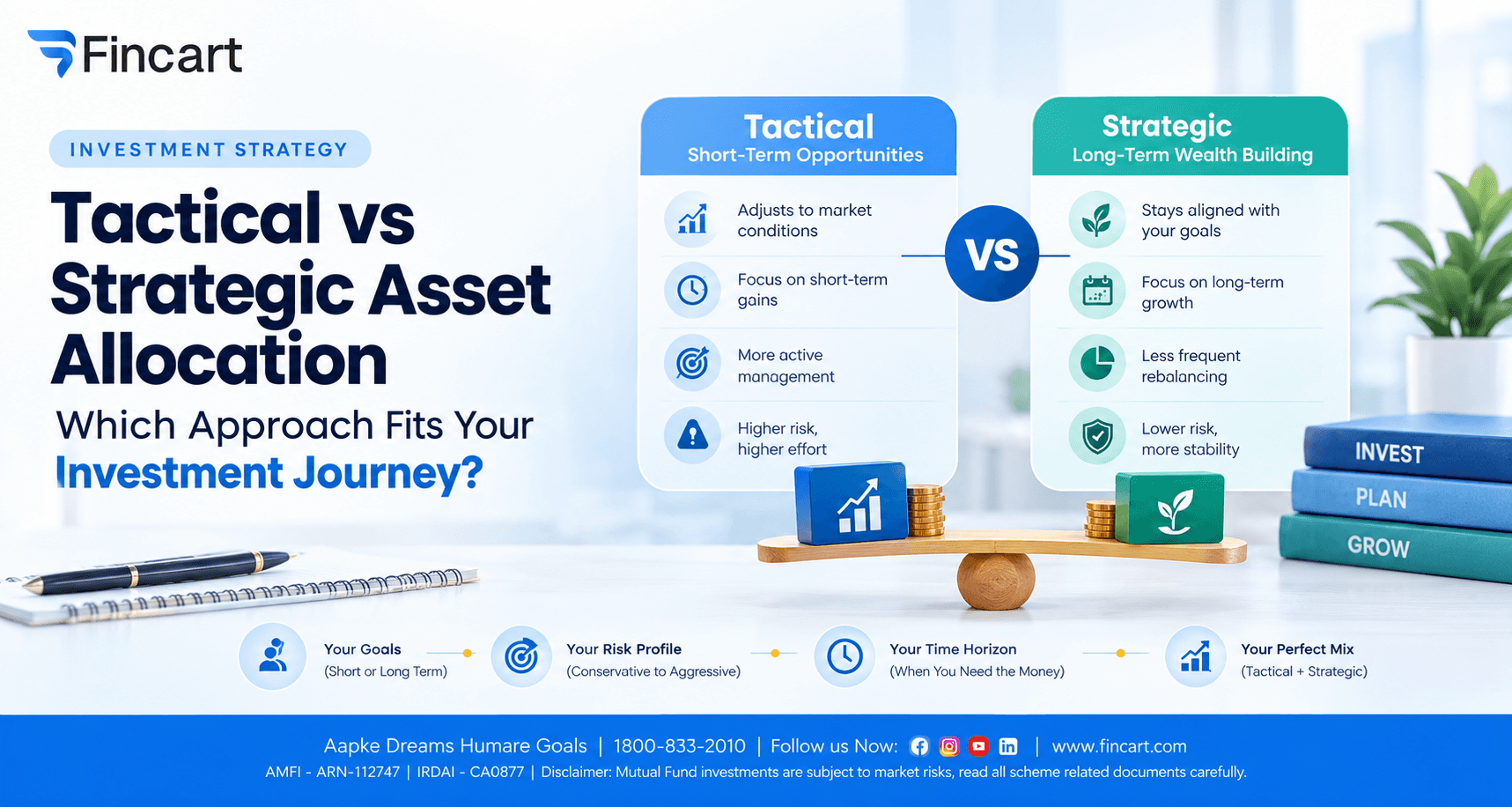
Balanced Advantage Funds can dynamically change their equity and debt allocation, potentially moving across a very wide range depending on the scheme's model and strategy. This gives the fund greater flexibility to adjust risk as market conditions change, but it also means the portfolio's equity exposure can be less predictable.
Aggressive Hybrid Funds, by comparison, must maintain 65–80% in equity and 20–35% in debt, giving investors a more defined asset-allocation profile. Neither is objectively better; the better fit depends on your goal, time horizon, risk tolerance, and how comfortable you are with a fund's changing asset allocation.
Who Should Actually Invest in These Funds?
Investors with a moderate-to-high risk appetite and at least a 3–5 year horizon.
First-time equity investors who want exposure without full equity volatility.
Investors building a retirement corpus who want one core holding rather than juggling separate equity and debt funds.
Anyone using a Systematic Withdrawal Plan (SWP) post-retirement, since the lower drawdowns make regular withdrawals less damaging during a downturn.
What to Check Before You Invest?
1. Expense ratio: This category involves active management across two asset classes, so ratios run higher than passive equity funds; compare within the category, not against index funds.
2. Consistency, not a single good year: Check 3-year, 5-year, and 7-year rolling returns, not just the latest 12 months.
3. Debt-side credit quality: Some funds chase yield by holding lower-rated debt; check the portfolio's credit profile, not just the headline return.
4. Exit load and holding period: Most funds charge an exit load if redeemed within 12 months of purchase.
This is usually the point where a mutual fund consultant adds the most value, not in picking the fund with the highest trailing return, but in flagging the trade-offs (credit risk, concentration, manager tenure) that a return table simply doesn't show.
How Aggressive Hybrid Funds Actually Behaved During Market Corrections?
During the January–March 2020 crash, the Nifty 50 fell roughly 38%, while aggressive hybrid funds, on average, limited losses to around 25%, meaningful downside protection, though still a real drawdown, not a safety net.
Interestingly, the cushion isn't always as strong as investors assume. During the correction phase between September 2024 and March 2025, a study by the National Institute of Securities Markets found aggressive hybrid funds actually fell more than balanced advantage funds over that window: down 8.58% on average, versus 6.17% for BAF funds because aggressive hybrids carry a fixed, higher equity floor and can't dial exposure down the way dynamic funds can. It's a nuance worth knowing before you assume "hybrid" automatically means "safer in every correction."
Here’s the honest takeaway: the best aggressive hybrid funds reduce volatility compared to pure equity, but the protection isn't uniform across every kind of downturn, which is exactly why reviewing your allocation with a mutual fund consultant periodically matters more than picking a fund once and forgetting it.
Risks You Shouldn't Ignore
These remain equity-oriented funds; a bad equity cycle will still hurt returns.
Returns will lag pure equity funds during strong bull runs, since 20–35% sits in debt.
Past 5-year or 10-year returns are not a guarantee of future performance.
Not a substitute for an emergency fund or a short-term parking instrument.
SIP or Lump Sum — Which Works Better Here?
For most investors, a SIP into the best aggressive hybrid funds smooths out entry timing on the equity side, which matters even in a hybrid structure since 65%+ of the portfolio still moves with the market.
Lump sum investing can work if you're deploying money after a correction, but timing that correctly is difficult even for professionals, one more reason many investors prefer working with a mutual fund advisor before committing a large lump sum.
The Bottom Line
The best aggressive hybrid funds aren't a single top pick; they're a category that rewards investors who match the fund to a real goal and a realistic time horizon, rather than chasing last year's returns. The data is encouraging: rising AUM, growing folio counts, and category returns that have held up reasonably well through a genuinely volatile couple of years. But data alone doesn't build a plan.
If you're evaluating the best aggressive hybrid funds, it's worth speaking to a qualified mutual fund advisor or mutual fund consultant before you commit, and mapping the investment to a number, not just a fund name. The consultant will also revisit that allocation with you every year or two, since the "best" fund in this category can shift as fund managers, expense ratios, and market cycles change.
FAQs
1. What is an aggressive hybrid mutual fund?
A SEBI-regulated hybrid fund that invests 65–80% in equity and 20–35% in debt, aiming for equity-like growth with reduced volatility.
2. Are aggressive hybrid funds safe?
No mutual fund is "safe" in the fixed-deposit sense. They carry lower volatility than pure equity funds but can still see double-digit drawdowns during a correction.
3. What is the ideal investment horizon?
Most mutual fund advisors recommend a minimum of 3–5 years, with 5+ years being ideal, to ride out equity market cycles.
4. Can I lose money investing in the best aggressive hybrid funds?
Yes. Aggressive hybrid funds are generally less volatile than pure equity funds because they also invest in debt. However, they still have substantial equity exposure, so their value can fall during market downturns, especially over shorter periods.
5. How are aggressive hybrid funds taxed?
They follow equity taxation rules: gains held over 12 months qualify as long-term capital gains; shorter holdings are taxed as short-term capital gains.
Disclaimer: Mutual fund investments are subject to market risks.
Read Important Disclosures